If you have been dreaming about a hobby farm near Bucyrus, you are not alone. A little land, room for a garden, maybe a few animals, and space to breathe can sound like the perfect next move. But before you buy, it helps to understand how acreage works in Miami County so you can choose a property that fits your plans and your budget. Let’s dive in.
Know What “Hobby Farm” Means Here
Near Bucyrus, a hobby farm usually falls within Miami County’s unincorporated zoning framework. According to the county’s Rural Living in Miami County guide, most of the unincorporated area is zoned Countryside (CS) or Agricultural (AG), and rural residential lots are generally defined as 3 to under 20 acres.
That matters because not every acreage property functions the same way. Some tracts are better suited to rural residential living with a little extra room, while others are set up more like full agricultural ground. In simple terms, your search should start with one question: are you looking for a homesite with space, a manageable small acreage setup, or land meant for heavier farm use?
Start With the Right Acreage Size
Acreage is one of the first things buyers focus on, but size alone does not tell the full story. In the Bucyrus area, public listings have shown parcels around 8.98, 9.42, 10, and 12 acres, along with much larger tracts of 48 and 78.44 acres. That range suggests many buyers can find starter acreage in the single-digit to low-teen range, while larger parcels often move into a more production-oriented category.
For many hobby-farm buyers, the sweet spot depends on how you want to use the land. A few acres may feel right if you want a garden, open space, and limited upkeep. A larger tract may offer more flexibility, but it also brings more mowing, fencing, maintenance, and long-term management.
Match Acres to Your Daily Routine
Before you fall in love with a property, think about the work that comes with it. More land can mean more pasture care, more fence line to maintain, and more seasonal chores. If you want the hobby-farm lifestyle to stay enjoyable, it helps to be realistic about how much land you want to manage week after week.
Think Beyond the Sales Sheet
The listing may tell you the acreage count, but it may not tell you how usable that acreage is. Slope, drainage, access, existing improvements, and layout all affect how the property lives day to day. A well-laid-out 10 acres can work better for your goals than a larger parcel with infrastructure challenges.
Check Zoning Before You Commit
Zoning should be one of your first due-diligence steps, not one of the last. Miami County notes that CS is designed for a rural residential lifestyle that may include equestrian use, while AG is intended for full agricultural activity. The county also makes clear that agricultural uses may be treated differently under Kansas nuisance and zoning rules, but buyers still need to verify permits, access, and building requirements before closing.
That is why it is smart to contact Miami County Planning and Zoning and Code Services early in the process. You want to confirm the zoning classification, ask about allowed uses, and make sure the property matches what you actually plan to do with it.
Can You Keep Animals?
That is one of the most common acreage questions, and the answer depends on the zoning and the property itself. Miami County’s zoning framework shows that CS may support a rural residential setup that includes equestrian use, while AG is designed for more complete agricultural activity. If you are considering animals, confirm the exact use with the county before you buy.
Verify Access and Driveway Rules
Access is easy to overlook when you are focused on the house, the pond, or the view. But for a hobby farm, road frontage and driveway approval can affect how practical the property is from day one. Miami County requires lots to front a street that meets county access requirements, and new driveway entrances generally need to be placed on the road segment directly in front of the property or on an approved shared entrance.
That means access is not just a convenience issue. It can shape how you enter the property, where improvements go, and whether your plans are even feasible. If a tract has unusual frontage or limited entry options, make sure you understand those details up front.
Confirm Water, Septic, and Power
Utilities are often where first-time acreage buyers get surprised. Miami County says a water well permit is required, wells must be registered with Code Services, and the well must be installed by a KDHE-licensed contractor. The county also requires an on-site wastewater permit before a building permit can be issued, and new structures require building permits.
In other words, do not assume a parcel is build-ready just because it is for sale. You need to know whether there is an existing well, whether septic is already in place, and what permit steps may still be needed.
Rural Water Is Parcel-Specific
Public water is available in parts of the county, but service is not automatic. Miami County Rural Water District No. 2 serves residents and businesses across the county, and Water District No. 7 also serves parts of Johnson and Miami counties. The key takeaway is simple: verify service for the exact tract instead of assuming rural water is available.
Existing Improvements Can Change the Math
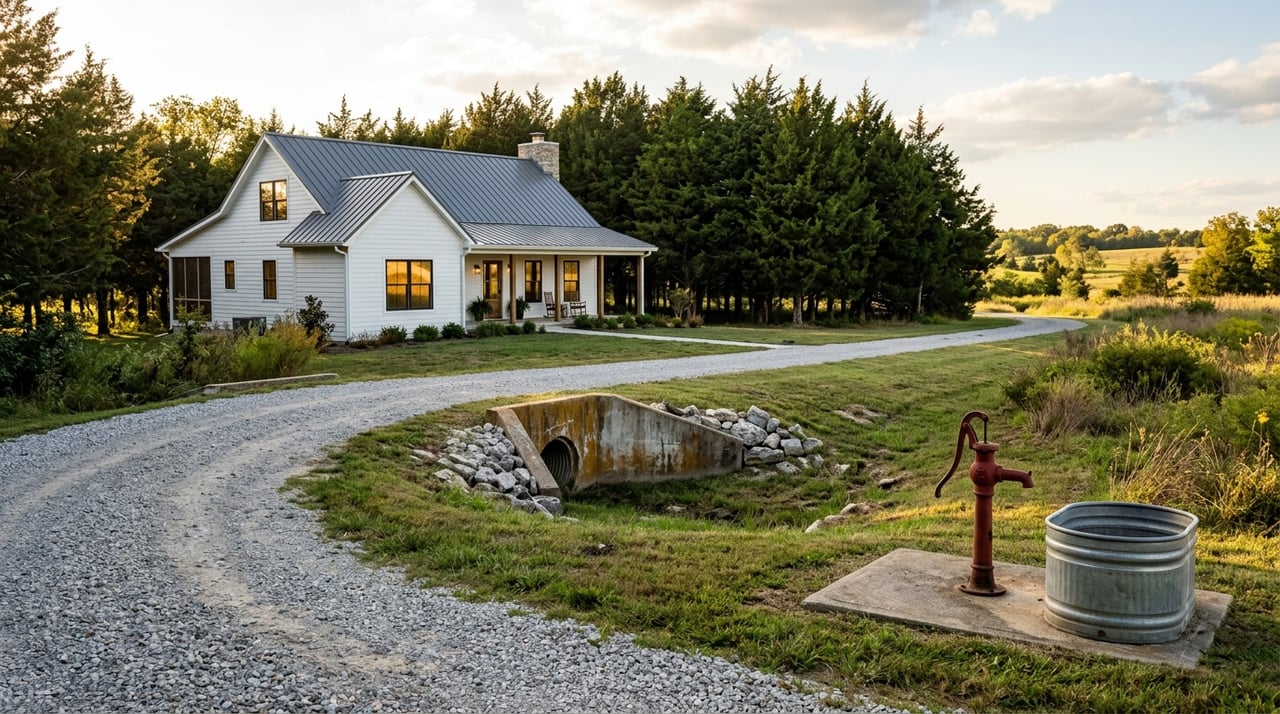
Current Bucyrus-area listings show just how much infrastructure can vary. Some parcels advertise barns, fencing, ponds, water meters, electricity, or septic systems already in place. Those features can make a big difference, because adding fencing, running power, or installing water and wastewater systems can change your total cost quickly.
Understand Soil and Drainage
A hobby farm is not just about acreage. It is also about what the land can realistically support. The USDA description of the Bucyrus soil series says these soils are very deep and moderately well drained, typically found on 1% to 8% slopes with annual precipitation around 35 to 43 inches.
That sounds encouraging, but there is an important detail. The same soil description notes intermittent wetness during high-rainfall periods. For you, that can affect gardens, pasture use, animal areas, drainage planning, and where you may want to place improvements.
Walk the Land With Questions in Mind
When touring acreage, look for low spots, standing water, slope changes, and worn paths that may reveal drainage patterns. A pretty parcel in dry weather can behave very differently after heavy rain. The more you understand the land’s natural patterns, the easier it is to match the property to your plans.
Plan for the Seasons
Life on a small farm follows the weather. Nearby Kansas City climate normals show hot summers and cool winters, with July normals around 88.3°F high and 68.1°F low, August around 89°F and 68°F, October around 67.2°F and 45.6°F, and December around 42.3°F and 23.9°F. The nearby Paola freeze pattern also matters, with an average last spring freeze of April 18 and first fall freeze of October 17, based on data from the National Weather Service.
For hobby-farm buyers, that means your growing season has a clear window. It also means summer watering, fall cleanup, frost protection, winter water management, and ongoing pasture or mowing work are part of the routine. Even a smaller acreage property asks for year-round attention.
Build Your Local Support Team Early
You do not need to figure out every land question alone. In fact, one of the smartest moves you can make is talking to the right local resources before you make an offer.
Start with Miami County Planning and Zoning or Code Services to confirm zoning, access, permits, and building requirements. You can also reach out to the Miami County Conservation District for information on cost-share funding and technical assistance related to water quality, soil health, and smaller-scale land management concerns.
If you want guidance on pasture, poultry, livestock, hay, specialty crops, or small-acreage management, K-State Extension small-acreage resources are also worth reviewing. Those resources can help you think more clearly about what you want the property to do and what it will take to maintain it.
A Smarter Way to Shop Near Bucyrus
The best hobby-farm purchase is not always the biggest one or the prettiest one. It is the one that fits how you want to live, what you want to raise or grow, and how much time and money you want to invest in the land. When you focus on zoning, access, utilities, soils, and seasonal upkeep, you put yourself in a much better position to buy with confidence.
If you are thinking about acreage near Bucyrus, working with someone who understands rural property can make the search a lot less overwhelming. When you are ready to talk through land options, next steps, or what to watch for on a specific tract, connect with Carlee Campbell.
FAQs
How many acres do you need for a hobby farm near Bucyrus?
- In Miami County, rural residential lots are generally defined as 3 to under 20 acres, but the right amount depends on your intended use, upkeep expectations, and whether the tract is more residential or agricultural in character.
Can you keep animals on a Bucyrus-area hobby farm?
- Possibly, but you should verify the property’s zoning first because Miami County’s CS and AG districts support different types of rural and agricultural use.
Will a Bucyrus acreage property need a well and septic system?
- Often yes, unless parcel-specific utility access says otherwise. Miami County requires permits for wells, on-site wastewater systems, and new building activity.
Is rural water available for all properties near Bucyrus?
- No. Rural water service exists in parts of Miami County, but you need to confirm availability for the exact parcel with the serving district.
What should you check first on hobby-farm land near Bucyrus?
- Start with zoning, legal access, driveway requirements, water and wastewater options, and whether the land’s soils and drainage fit your plans.